
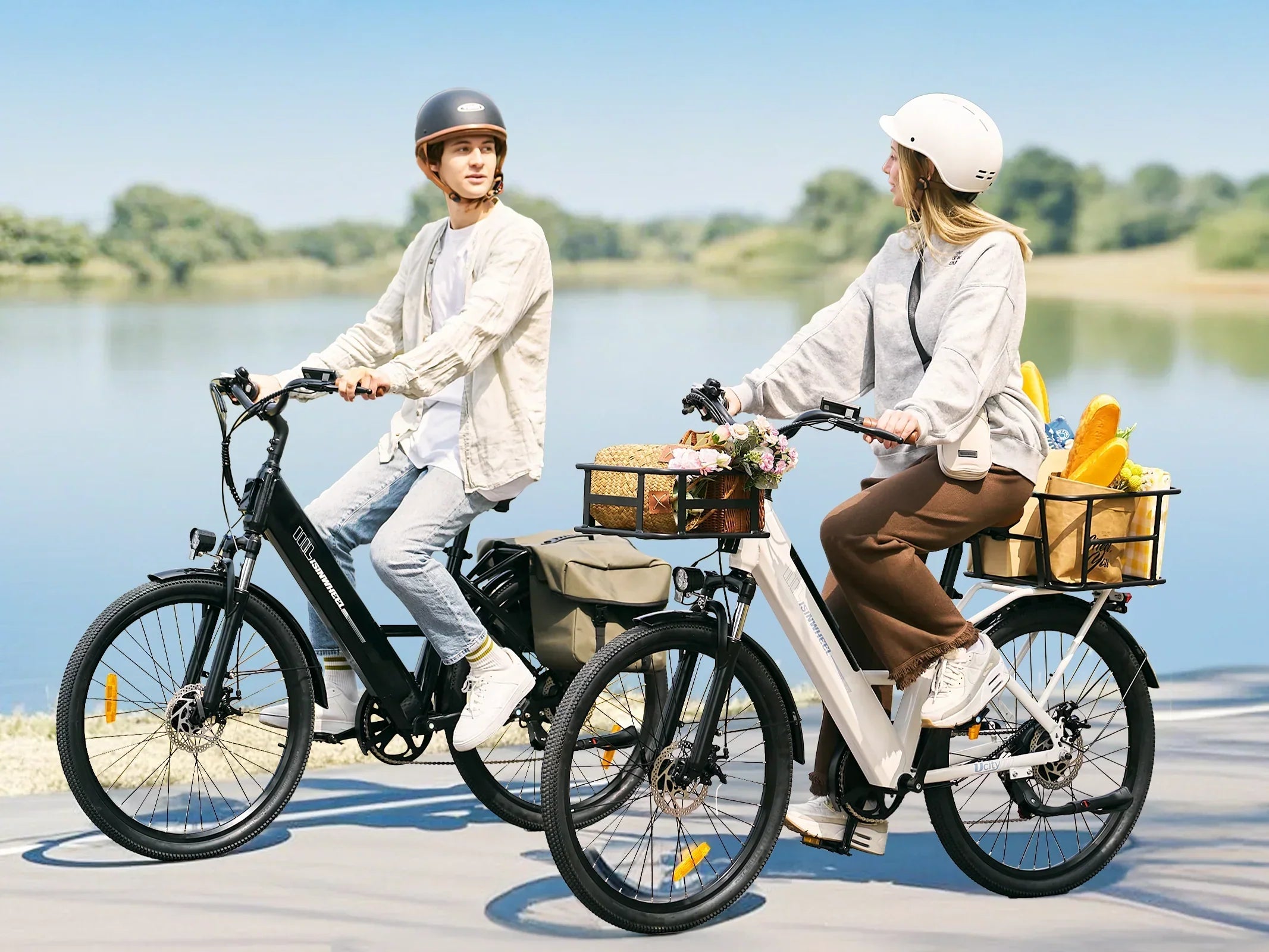
Electric bike uphill performance transforms the most challenging terrain into an enjoyable ride.
With motor assistance providing that crucial power boost when tackling steep gradients, hills that once seemed impossible become accessible to riders of all fitness levels.
Even modest 250W motors can conquer significant inclines when paired with your pedaling, while more powerful options make light work of the steepest climbs. The beauty of e-bikes isn't just in conquering hills, but in how they open up entirely new routes and vistas that you might have previously avoided.
Read on to discover how to maximize your electric bike's uphill capabilities.
How E-Bikes Handle Hills

Electric bikes have revolutionized uphill riding, making steep climbs accessible to more cyclists. The technology in today's e-bikes specifically addresses the challenges of hill climbing through specialized motors and battery systems.
Maximum Slopes And Real-World Performance
Most quality e-bikes can handle slopes between 15-20% grade without much trouble. You'll find that even steeper hills up to 30% are possible with the right e-bike setup.
Your weight, the bike's weight, and how you ride all affect uphill performance.
When riding uphill, try to maintain a steady cadence rather than pushing hard gears. This helps your e-bike's motor work more efficiently.
Many riders report being able to climb hills they never thought possible before.
Real-world performance varies by terrain and conditions. Loose gravel or wet surfaces make climbs harder even with electric assistance.
At higher altitudes, you might notice slightly reduced performance due to thinner air.
Motors, Batteries And Torque For Climbing
For tackling hills, torque matters more than top speed. A motor with high torque gives you that powerful push needed on steep inclines.
Mid-drive motors are often better for serious hill climbing because they work through your bike's gears.
While 250W motors handle moderate hills adequately, steep climbs benefit from 500W or higher motors.
Look for motors advertising at least 60-80 Nm of torque for serious hill climbing. Your battery capacity affects how many hills you can climb before needing a recharge.
Bigger batteries (usually measured in watt-hours) mean more climbing power over longer rides.
Smaller wheels can surprisingly help with hills by providing more torque. Some e-bikes also feature special hill-climbing modes that increase power assistance when sensors detect an incline.
Frequently Asked Questions
Can an electric bike ascend a steep incline without requiring pedaling effort?
Most electric bikes will need some pedaling on steep hills. Class 2 e-bikes with throttle control can climb moderate hills without pedaling, but very steep inclines usually require pedal assist.
Your weight, the bike's weight, and battery charge all affect how much pedaling you'll need to do.
Even with throttle-only mode, the motor may strain on long, steep climbs. For the best results on big hills, plan to pedal lightly while letting the motor do most of the work.
What are the most suitable gear settings for an ebike when tackling uphill routes?
Use lower gears when climbing hills on your e-bike. This helps maintain a steady pedaling rhythm of about 60 RPM and prevents motor strain.
Shift to an easier gear before you start the climb. Many riders use 1st or 2nd gear on steep hills to maintain their pedaling cadence without tiring out quickly.
Keep your pedaling smooth and consistent rather than pushing hard in a high gear. This approach conserves both your energy and battery power.
What is the maximum hill gradient an electric bike can effectively climb?
Most quality electric bikes can handle grades of 15-20% without much trouble. More powerful models can climb grades up to 25-30% with some pedaling help.
The steepest hills (over 30% grade) will challenge even the best e-bikes. Factors like motor type, battery power, and bike weight affect climbing ability.
Mid-drive motors typically perform better on very steep hills compared to hub motors because they work through the bike's gears.
How does motor wattage impact an electric bike's uphill performance?
Higher wattage motors provide more climbing power. A 750W motor will climb hills much better than a 250W motor.
Motor type matters too. Mid-drive motors often climb better than hub motors of the same wattage because they use the bike's gears.
This helps them maintain efficiency on long climbs.
Torque rating is also important for hill climbing. Look for motors with at least 70Nm of torque for good hill performance, with 80-100Nm being ideal for steep terrain.
Share:
Are Electric Bikes Waterproof? What You Need To Know
Skateboard Downhill Guide: Techniques, Gear, & Safety Tips for Newbies